Hawaii 2027
Hawaii 2027
RAMSES
RAMSES

Dear Friends and Colleagues,
It is our great pleasure to welcome you to RAMSES 2027 in Honolulu, Hawaiʻi.
 Surgery is entering an extraordinary period of transformation. Robotics has expanded what we can accomplish through smaller and more precise approaches. Microsurgical platforms are extending the limits of human dexterity. Artificial intelligence is beginning to influence how we plan operations, analyze performance, educate surgeons, and make decisions. Individually, each of these technologies is exciting. Together, they represent The Next Wave.
RAMSES has always been unique because it brings together innovators who look beyond the boundaries of a single specialty. This year, we are expanding that vision even further. Surgeons from multiple disciplines will join microsurgeons, robotic surgeons, engineers, scientists, and leaders in artificial intelligence to explore not simply what these technologies can do today, but where they can take surgery tomorrow.
Our goal is to create a meeting built around interaction and the exchange of ideas. We will explore emerging robotic platforms, advances in microsurgery and supermicrosurgery, artificial intelligence, surgical education, minimally invasive reconstruction, and new technologies that are changing the way we operate. Just as importantly, we want to learn from one another. Innovations developed in one specialty often have the potential to transform another.
Hawaiʻi is an especially fitting place for this conversation. Waves connect distant shores, carry ideas across boundaries, and continually reshape what they touch. In the same way, the next wave of surgical innovation will come from the convergence of human expertise, robotics, microsurgery, artificial intelligence, and collaboration across specialties.
Technology alone, however, does not define the future of surgery. Its greatest value comes when it enhances the judgment, creativity, and skill of the surgeon and ultimately improves the care we provide our patients.
We invite you to bring your experience, your questions, your innovations, and your vision for what comes next.
Join us in Honolulu as we explore The Next Wave: Robotics, AI & the Future of Microsurgery.
We look forward to welcoming you to Hawaiʻi.
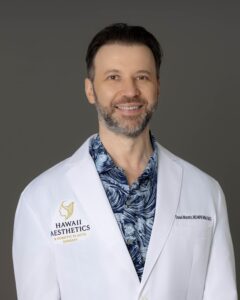
Daniel Murariu, MD, MPH, MBA, FACS
RAMSES 2027 President